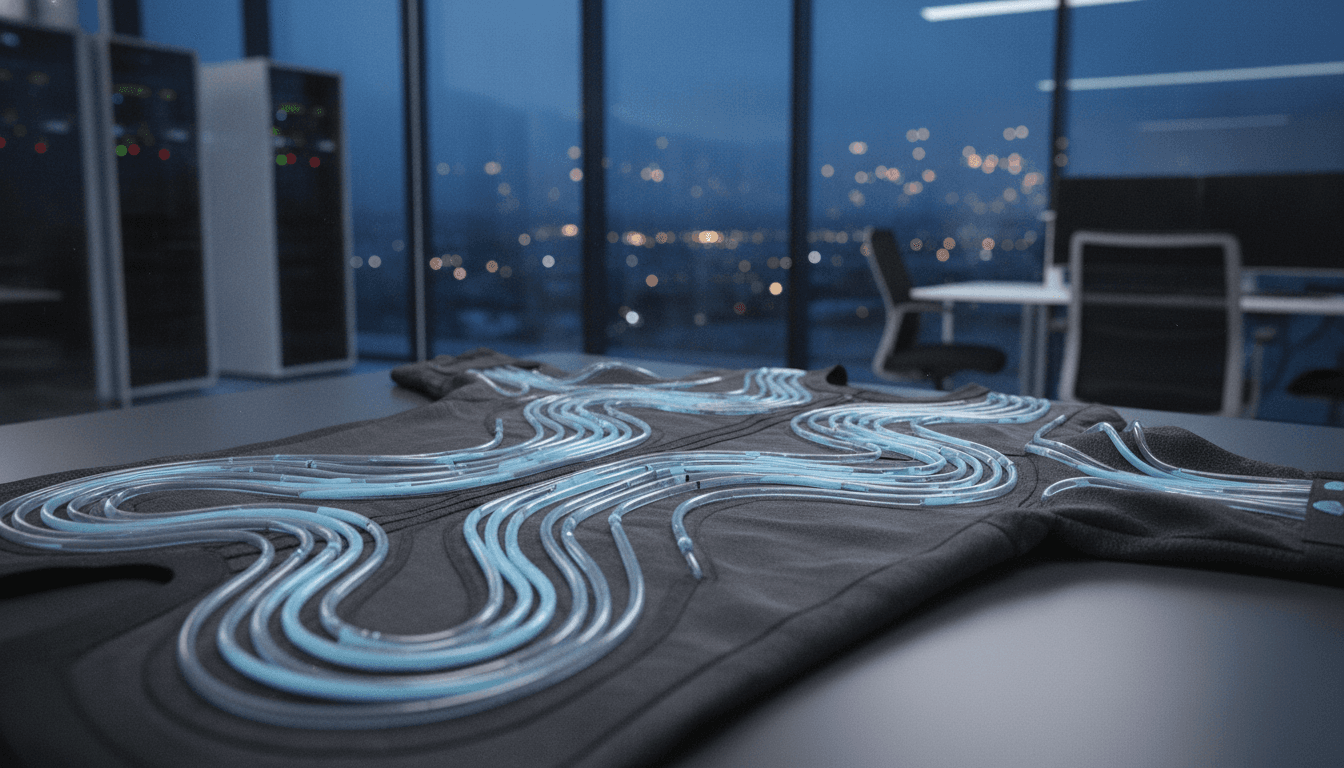
NASA will adopt high-tech Prada for its upcoming lunar missions, integrating luxury fashion’s material expertise into critical astronaut wear. This innovative collaboration between Axiom Space and the iconic Italian fashion house, Prada, sees the unveiling of the Liquid Cooling and Ventilation Garment (LCVG) – the essential base layer for astronauts venturing to the Moon aboard the Artemis IV mission in 2028.
The LCVG, often dubbed ‘Prada long johns’ due to its high-tech, form-fitting design, is far more than just an undergarment. It is a sophisticated piece of engineering designed to maintain astronaut comfort and safety within the Axiom Extravehicular Mobility Unit (AxEMU) spacesuit during strenuous spacewalks. Its primary function involves circulating cold water through an intricate network of embedded tubes, efficiently wicking away body heat – a crucial mechanism for thermal regulation in the extreme lunar environment.
Prada’s Leap from Runway to Space
Prada’s involvement in the AxEMU project, and now the LCVG, marks a significant expansion of its design and materials expertise beyond traditional luxury fashion. The brand’s deep understanding of advanced fabrics, manufacturing precision, and ergonomic design is being leveraged to create garments that meet the rigorous demands of space exploration. This partnership highlights a growing trend of cross-industry collaborations, where specialized knowledge from seemingly disparate fields converges to solve complex engineering challenges.
A key innovation in the LCVG is its redundant cooling system. Unlike previous cooling suits, this next-generation garment incorporates a backup system, providing an additional layer of safety should the primary cooling mechanism encounter an issue. This redundancy is paramount for missions where equipment failure can have catastrophic consequences. Beyond cooling, the LCVG also integrates a vital ventilation system, supplying fresh oxygen to the AxEMU helmet and channeling exhaled carbon dioxide to a scrubber for recirculation, ensuring a breathable atmosphere for the astronaut.
“The integration of Prada’s material science and design philosophy into NASA’s lunar spacesuits represents a groundbreaking fusion of high fashion and high-tech engineering, promising unprecedented astronaut comfort and performance.”
Engineering Comfort for Lunar Exploration
The development of the LCVG underscores the immense effort required to ensure astronaut well-being during extended lunar missions. Maintaining optimal body temperature and providing a consistent supply of fresh air are fundamental to preventing heat stress and fatigue, which could impair an astronaut’s ability to perform critical tasks. The meticulous design of the LCVG, with its focus on both active cooling and ventilation, is a testament to the commitment to pushing the boundaries of human endurance in space.
This isn’t NASA’s first foray into blending high-tech materials with design ingenuity for astronaut gear. Past initiatives, such as the BioSuit concept developed by MIT professor Dava Newman with architect Guillermo Trotti, have explored similar intersections. However, the Axiom Space-Prada collaboration for the Artemis IV mission signifies a tangible and imminent application of such advanced design principles for actual lunar exploration.
The Future of Space Apparel and Internal Links
As humanity prepares for a sustained return to the Moon and eventual journeys to Mars, the evolution of space apparel like the LCVG becomes increasingly vital. Innovations in materials, thermal management, and life support systems are crucial for longer duration missions and for enhancing astronaut mobility and efficiency. This partnership between Axiom Space and Prada sets a new standard for functional elegance in space, ensuring that astronauts are not only protected but also perform optimally. For more on cutting-edge space technology, explore our related Tech news.
The move to adopt high-tech Prada for lunar missions exemplifies a forward-thinking approach to space exploration, where comfort and safety are elevated through interdisciplinary collaboration, paving the way for future advancements in astronaut attire.