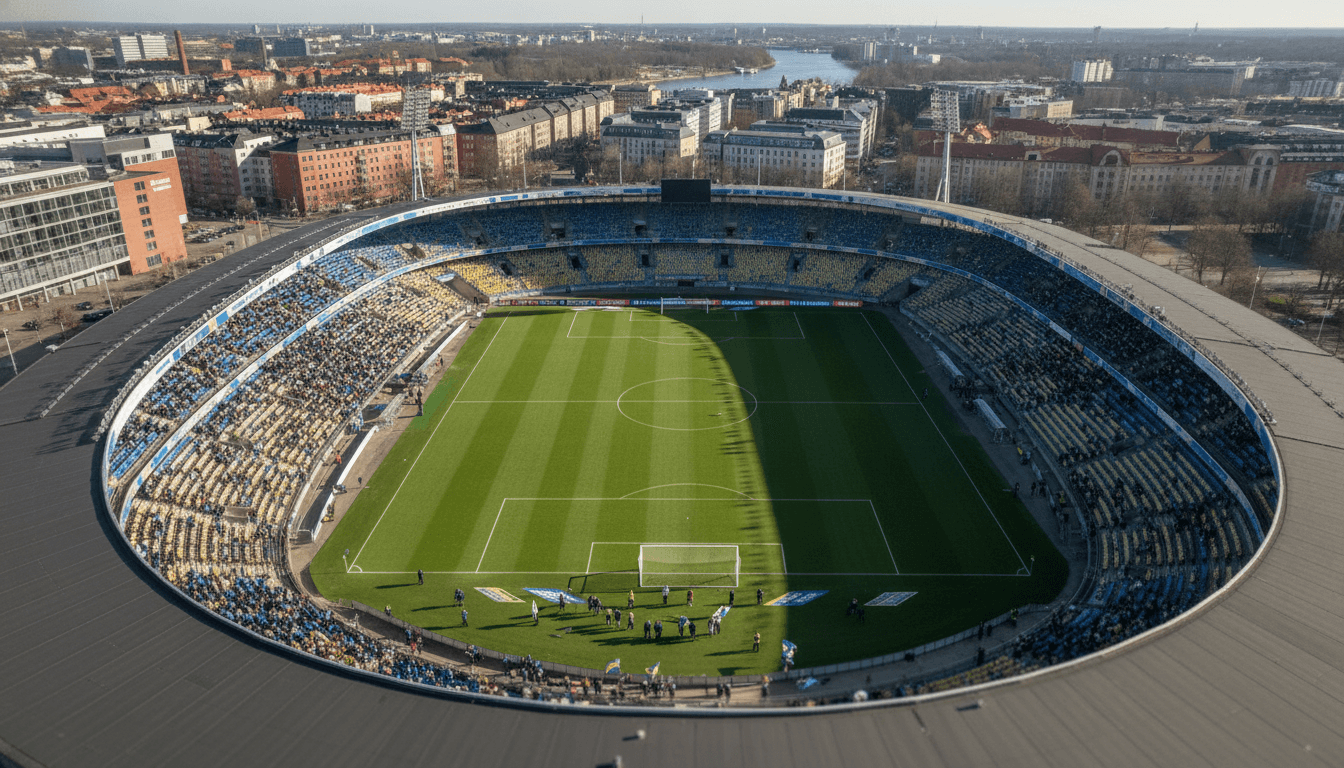
Sweden and Italy head to play-offs after a dramatic 2-2 draw in their Women’s World Cup qualifying Group A1 finale at Gamla Ullevi on Thursday, June 11, 2026. This result, while a spirited comeback for Sweden, ultimately confirmed their third-place finish in the group, ensuring both nations will now face the arduous route of the play-offs to secure a spot in the 2027 tournament in Brazil.
The stakes were high for both teams entering this final group stage encounter. Sweden’s hopes for automatic qualification had been dashed just days prior, following a crucial 2-1 defeat to Denmark on Friday, June 5. This left them a point behind Italy, who still harbored ambitions of snatching the top spot from the Danes, provided they secured a victory and Serbia managed an upset against Denmark in their simultaneous fixture. However, as Denmark quickly established a commanding lead in Stara Pazova, the focus in Gothenburg swiftly shifted to a battle for second place and the more favorable seeding it might offer in the upcoming play-offs.
The first half saw Italy assert their dominance, taking control in the final 10 minutes. The breakthrough came in the 36th minute when Lucia Di Guglielmo and Sofia Cantore combined effectively down the right wing. Cantore then delivered a precise low ball behind the Swedish defense, allowing Elisabetta Oliviero to unleash a shot that found the net off the crossbar. The visitors doubled their lead on the stroke of half-time, with Oliviero turning provider. Her cross from the left wing was met cleanly by Martina Piemonte, who headed the ball down and out of the reach of Sweden’s goalkeeper, Jennifer Falk, leaving the home side with a daunting two-goal deficit at the interval.
Impact Analysis
Sweden head coach Tony Gustavsson responded with tactical changes, including the introduction of Hanna Lundkvist and Fridolina Rolfo. This proved to be a pivotal decision, as the Manchester United duo spearheaded a remarkable comeback, scoring two goals in a frenetic three-minute spell. The first Swedish goal arrived 20 minutes from time, initiated by an Amanda Nilden corner. Cecilia Salvai inadvertently headed the ball back across her own area to Lundkvist, whose powerful header was initially parried by Laura Giuliani onto the crossbar. The ball, however, deflected off the Italian goalkeeper and into the net for an own goal, injecting new life into the Swedish challenge.
Playing with newfound confidence, Sweden immediately pressed for an equalizer, winning another corner. Nilden’s subsequent delivery was met by Bella Andersson’s header. Giuliani managed to parry the effort, but the rebound fell kindly to the alert Rolfo, who fired the ball high into the net from close range, completing the dramatic turnaround. Despite late efforts from Stina Blackstenius and Rolfo to find a winner, Sweden couldn’t complete the full comeback, settling for the 2-2 draw and finishing third in Group A1 with eight points from six matches.
This outcome means both Sweden and Italy head to play-offs in October 2026. For Sweden, the path to Brazil next year will involve navigating two challenging rounds. Their campaign will commence against a League C side that finished first or second in their respective group. The Swedes, who have managed only two wins in their last 11 games, will undoubtedly need a significant upturn in form to secure their place in the tournament. This qualifying cycle has underscored the increasing competitiveness within women’s international football, where traditional powerhouses like Sweden can no longer take direct qualification for granted. The reliance on the play-off route adds an extra layer of pressure and uncertainty to their World Cup aspirations.
“The dramatic finish in Gothenburg highlights the fine margins that define modern international football. Both Sweden and Italy now face a challenging path, a testament to the growing strength across European women’s teams.”
The broader implications for women’s football are significant. The expansion of the World Cup and the tiered qualification system aim to foster development across more nations, but it also intensifies the competition for established teams. For Sweden, a nation with a rich history in women’s football, failing to secure automatic qualification is a wake-up call. The upcoming play-offs will test their resilience, depth, and tactical adaptability against potentially less-heralded but equally determined opponents. The performance of key players like Rolfo and Lundkvist, who were instrumental in the comeback against Italy, will be crucial. Related sports news articles often discuss the increasing investment in women’s football, and such competitive qualifying campaigns are a direct result of this growth.
Looking ahead, the October 2026 play-offs represent a critical juncture for both Sweden and Italy. For Sweden, the immediate task is to regroup and analyze their recent form, addressing the inconsistencies that have plagued their qualifying campaign. Their journey will be closely watched, not just by fans but by analysts keen to see how a top-tier nation navigates the challenges of a multi-round play-off system. The pressure will be immense, as missing out on a World Cup would be a significant blow to their program. For Italy, securing second place provides a slightly better seeding, but their play-off path will also demand peak performance. The 2-2 draw against Sweden, while disappointing in its immediate context, showcased their ability to take a commanding lead, a quality they will need to harness in the do-or-die play-off fixtures.
The shared fate of Sweden and Italy heading to play-offs underscores the evolving landscape of the Women’s World Cup qualification. The era of comfortable progression for established teams is increasingly over, replaced by a highly competitive environment where every match carries immense weight. Both nations now face a rigorous test of nerve and skill, with their World Cup dreams hanging in the balance.