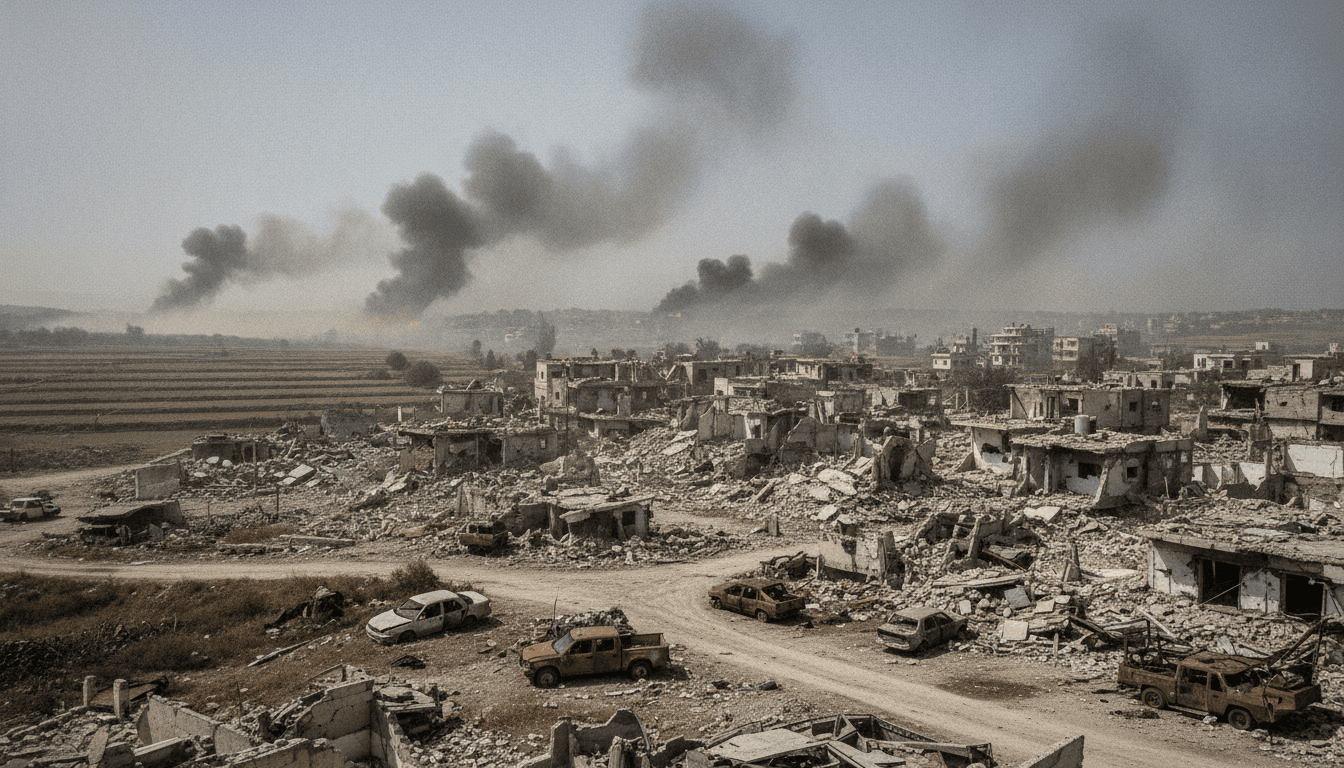
Western media obscures Israel’s ethnic cleansing in Lebanon through carefully curated narratives and a selective focus that downplays the severity of ongoing Israeli actions. A recent investigation by Naked Capitalism, drawing on analysis from Belén Fernández and The Public Source, highlights how major Western corporate media outlets often normalize Israeli military operations and their devastating impact on Lebanese civilians. This normalization extends beyond mere reporting, encompassing a deliberate framing of events that consistently favors the Israeli perspective, even when confronted with evidence of widespread destruction and displacement.
In October 2024, a year into Israel’s intensified military actions in Gaza and Lebanon, a telling incident occurred: the Israeli army invited journalists from prominent Western media organizations on an incursion into southern Lebanon. Accompanied by Israeli military personnel, these journalists were presented with an interpretation of the wreckage that conveniently aligned with Israeli interests. Reporters from the New York Times, Washington Post, Associated Press, Reuters, BBC, and Fox News participated in what The Public Source described as an “awkward hybrid between a traditional embed and the kind of all-expense-paid publicity trip that journalists refer to as junkets, freebies and dog-and-pony shows.”
This cross-border sortie, illegal under international law for journalists entering Lebanon from Israel, saw media professionals embedding themselves “within a national project of extraordinary transnational violence,” hosted by an “extrajudicial occupying military power,” a critical detail often omitted from their coverage. The resulting reports, such as Isabel Kershner’s New York Times dispatch, “Just Over the Border From Israel, a Hezbollah Cache of Explosives and Mines,” faithfully transmitted the notion that Hezbollah was the aggressor, despite Israel actively slaughtering thousands in Lebanon and implementing a scorched-earth strategy.
The Language of Normalization
Even without direct embeds, Western corporate media continues to sanitize Israeli brutality. Since March of this year, Israel has killed at least 3,613 people in Lebanon and displaced 1.2 million, obliterating entire villages and expanding its ecocidal policy honed in the Gaza Strip. Despite this significant destruction, a recent Reuters article, which initially suggested a symmetry of displacement, had to be corrected to remove a reference to tens of thousands of Israelis being displaced by Hezbollah fire, highlighting the media’s tendency to create false equivalences.
The reporting of “ceasefires” in Lebanon also often fails to highlight the ongoing Israeli bombardment and massacres. These narratives frequently set the stage for massive land grabs through “evacuation orders,” which Lebanese journalist Habib Battah more accurately terms “ethnic cleansing directives.” These orders, focused on the Shiite demographic, warn Christian and Druze communities against sheltering their Shiite neighbors. The media, however, frames these as “urgent evacuation warnings” or “large-scale evacuation orders,” legitimizing fundamentally illegal and morally questionable actions.
Understanding the ‘Yellow Line’ and ‘Security Zone’
Another example of normalized terminology is the “Yellow Line” or “security zone,” phrases borrowed from Gaza to denote the illegally occupied portion of south Lebanon. Israel’s latest “evacuation orders” have spanned one-fifth of the entire country, far beyond its self-appointed Yellow Line. As Battah notes, the media’s acceptance of such arbitrary vocabulary creates “artificial structures” and a sense of orderliness, masking the reality of “illegal invasions” and enabling colonization to become normalized. This consistent pattern demonstrates how Western media obscures Israel’s ethnic cleansing in Lebanon, hindering a clear understanding of the conflict.
“Colonization becomes normalized when media are committed to sanitizing Israel’s behavior rather than questioning it.”
The eagerness of some journalists to align with Israeli narratives is particularly confounding given that Israel is currently the leading killer of journalists globally. While corporate media does report on the destruction and displacement, their refusal to paint a consistent and properly contextualized picture means they frequently end up legitimizing Israeli war crimes. This selective reporting ensures that the full scale of the humanitarian crisis and the implications of Israeli actions remain largely unexamined, making it harder for the public to grasp the true nature of the conflict and the ongoing ethnic cleansing.
The consistent omission of context and the adoption of Israeli-favored terminology by Western media outlets have profound implications. By framing illegal invasions as legitimate security operations and ethnic cleansing directives as mere evacuation warnings, these publications contribute to a distorted public perception. This narrative control not only diminishes the suffering of the Lebanese people but also shields Israel from international accountability for its actions. A more critical and independent journalistic approach is essential to accurately portray the realities on the ground and challenge the normalization of violence and displacement.